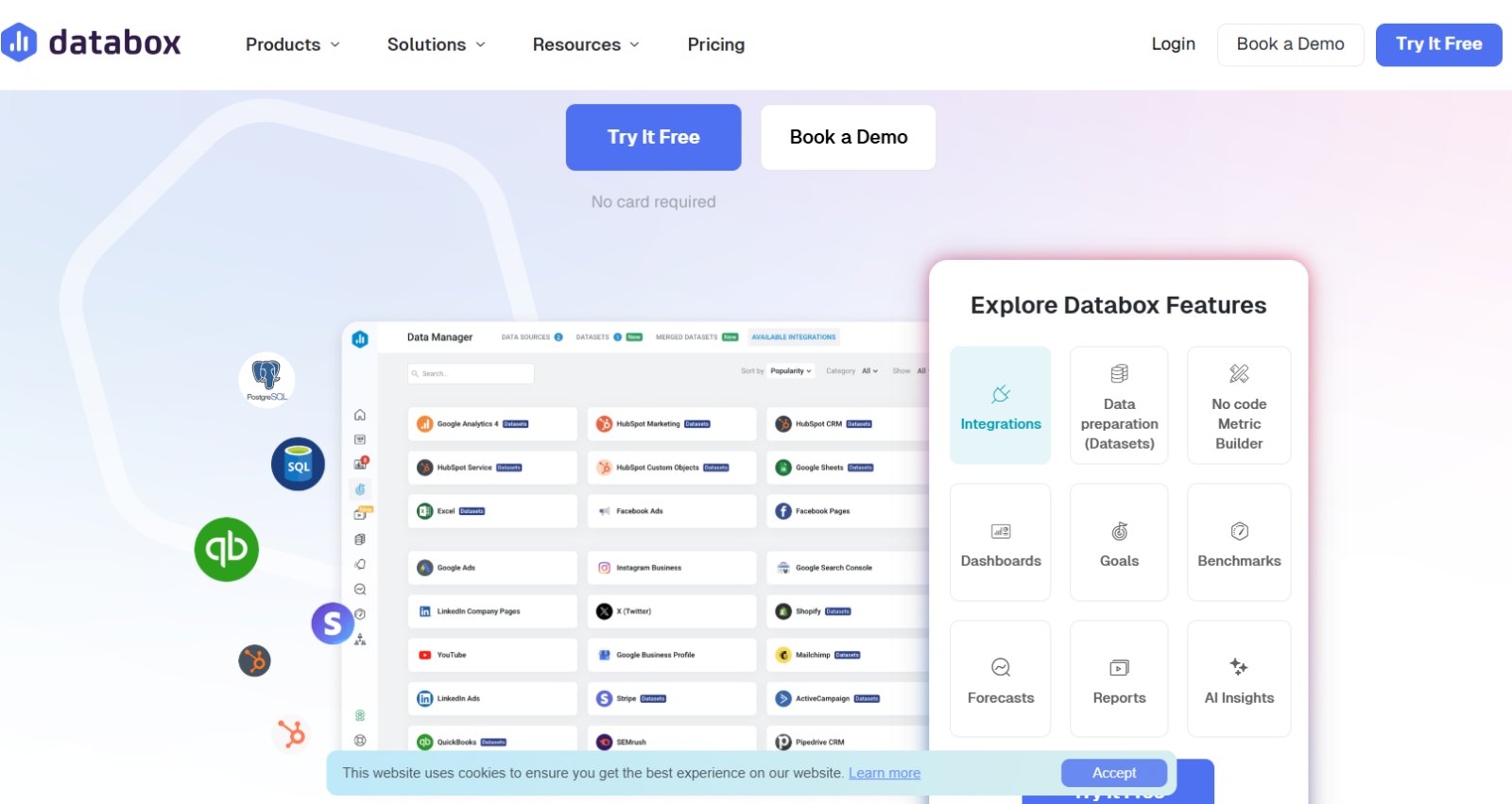
In today’s data-driven world, businesses collect information from dozens of platforms—Google Analytics, CRM systems, ad networks, email tools, and more. The challenge isn’t lack of data, but making sense of it quickly. This is exactly where Databox shines.
Databox is a business analytics and reporting platform designed to centralize data, visualize performance, and help teams make faster, smarter decisions. Instead of jumping between tools and spreadsheets, users can monitor everything from one clean dashboard.
What Is Databox and Why Businesses Use It
At its core, Databox is a real-time analytics dashboard that connects to hundreds of data sources. It pulls metrics automatically and presents them in a clear, visual format that’s easy to understand.
Businesses use Databox to:
-
Track KPIs in real time
-
Monitor marketing, sales, and finance data
-
Create automated reports
-
Align teams around shared goals
For growing teams, Databox becomes the single source of truth.
Real-World Use Cases of Databox
Databox isn’t limited to one industry. Its flexibility makes it useful across many business models.
Marketing teams rely on Databox dashboards to track ad performance, website traffic, and conversion rates. Sales teams use it to monitor pipelines, revenue, and deal velocity. Executives use Databox to see high-level performance without digging through raw data.
Many users who adopt Databox software say it replaces multiple reporting tools and eliminates hours of manual reporting every week.
Integrations and Data Sources
One of Databox’s biggest strengths is its wide range of integrations. Users can connect tools such as:
-
Google Analytics
-
Google Ads and Facebook Ads
-
HubSpot, Salesforce, and CRMs
-
Email marketing platforms
-
E-commerce tools
With these integrations, Databox automatically syncs data and keeps dashboards updated in real time.
This makes Databox online analytics especially valuable for teams managing multiple platforms simultaneously.
Custom Dashboards and Visualization
Databox allows users to build custom dashboards tailored to their goals. You can choose which metrics matter most and visualize them using charts, graphs, and scorecards.
Dashboards can be:
-
Role-specific (marketing, sales, management)
-
Shared across teams
-
Displayed on TV screens or mobile devices
This visual clarity helps teams stay focused and aligned.
Automation and Reporting
Manual reporting is one of the biggest productivity killers in modern businesses. Databox solves this by automating reports.
Users can schedule reports to be sent daily, weekly, or monthly. Reports are always up-to-date and visually polished, making them ideal for internal reviews or client presentations.
By using Databox reporting tools, businesses save time while improving accuracy.
Databox Pricing and Value
Databox offers multiple pricing tiers, including a free plan for basic use. Paid plans unlock advanced features such as more data sources, historical data, and customization.
When evaluating Databox pricing, many users find the platform delivers strong ROI by:
Right now, users can access special offers when signing up through the Databox official website, making it a great time to get started.
Databox Deals, Discounts, and Promotions
For new users, Databox deals are often available directly through the official site.
-
Some plans include free access with limited features
-
Paid plans may offer discounted rates on annual subscriptions
-
Promotions can help teams scale without high upfront costs
These offers make Databox analytics software accessible to startups, agencies, and enterprises alike.
Who Should Use Databox?
Databox is ideal for:
-
Marketing and sales teams
-
Agencies managing multiple clients
-
SaaS companies tracking growth metrics
-
Business owners who want clear performance insights
If your business relies on data to make decisions, Databox is a powerful solution.
Ease of Use and Learning Curve
Despite its advanced capabilities, Databox is easy to use. The interface is clean, intuitive, and designed for non-technical users.
Most teams can set up their first dashboard within minutes, making Databox accessible even for beginners.
Frequently Asked Questions About Databox
What is Databox used for?
Databox is used to track, visualize, and analyze business performance data from multiple platforms in one centralized dashboard.
Is Databox free to use?
Databox offers a free plan with limited features. Paid plans unlock more data sources, historical data, and advanced customization.
Can Databox replace spreadsheets?
For reporting and performance tracking, Databox can replace many spreadsheet workflows by automating data collection and visualization.
Does Databox support real-time data?
Yes. Databox updates dashboards automatically, allowing users to monitor performance in real time.
Is Databox suitable for small businesses?
Yes. Databox is widely used by startups and small teams thanks to its flexible pricing and ease of use.
Can agencies use Databox for multiple clients?
Absolutely. Databox supports multiple dashboards and data sources, making it ideal for agencies managing client reporting.
Does Databox integrate with marketing and sales tools?
Yes. Databox integrates with popular marketing, sales, analytics, and CRM platforms.
Are there Databox discounts or promotions available?
Databox occasionally offers discounts or promotional pricing through the official website, especially for annual plans.
Is Databox worth paying for?
For teams that rely on data to make decisions, Databox is worth the investment due to time savings and improved insights.