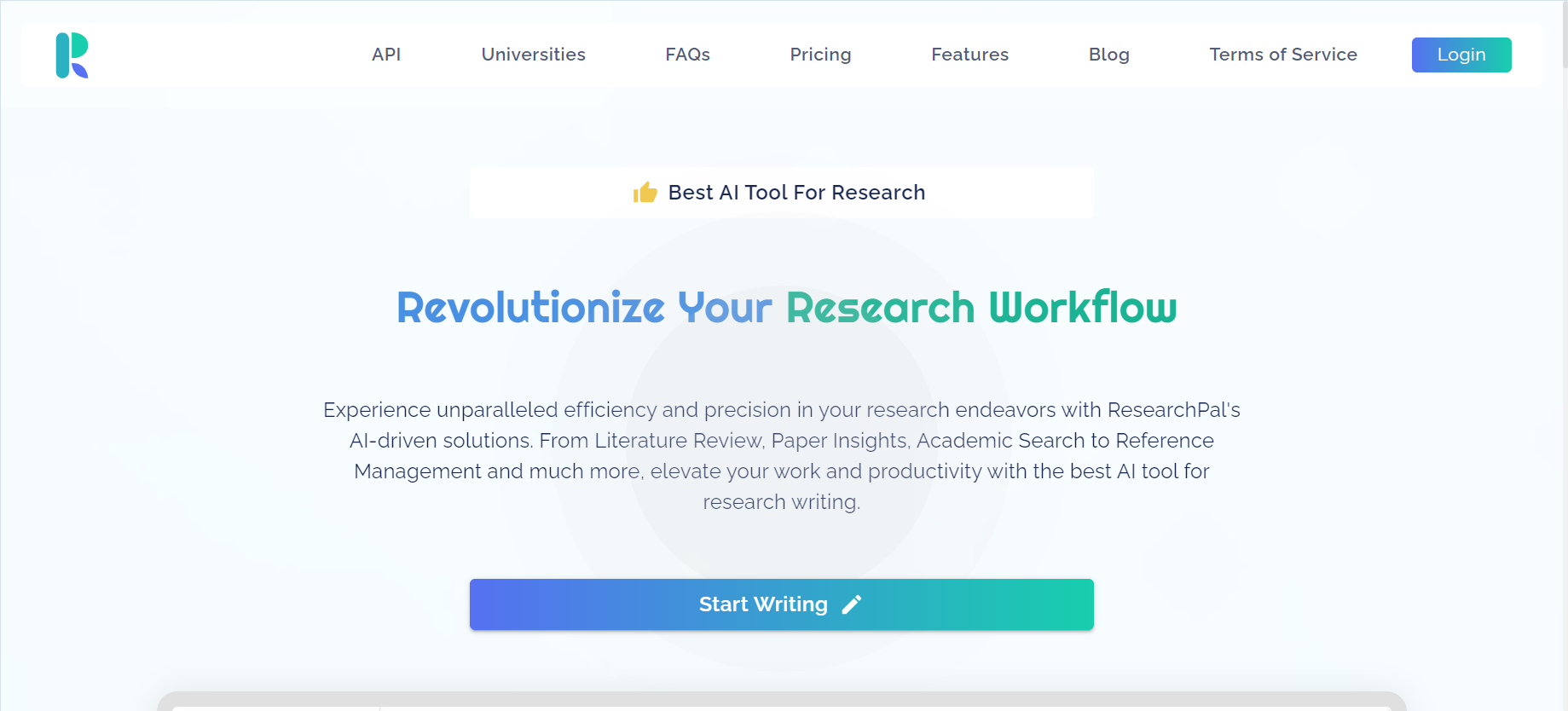
Literature reviews used to eat my weekends. Hunting for relevant papers, wrangling citations into the right format, re-reading PDFs to find that one quote — it’s the least glamorous part of research. So I tried ResearchPal, which promises to compress that whole workflow into one AI workspace. Here’s my honest, first-person review of what helped and where I’d be careful.
1. What Is ResearchPal?
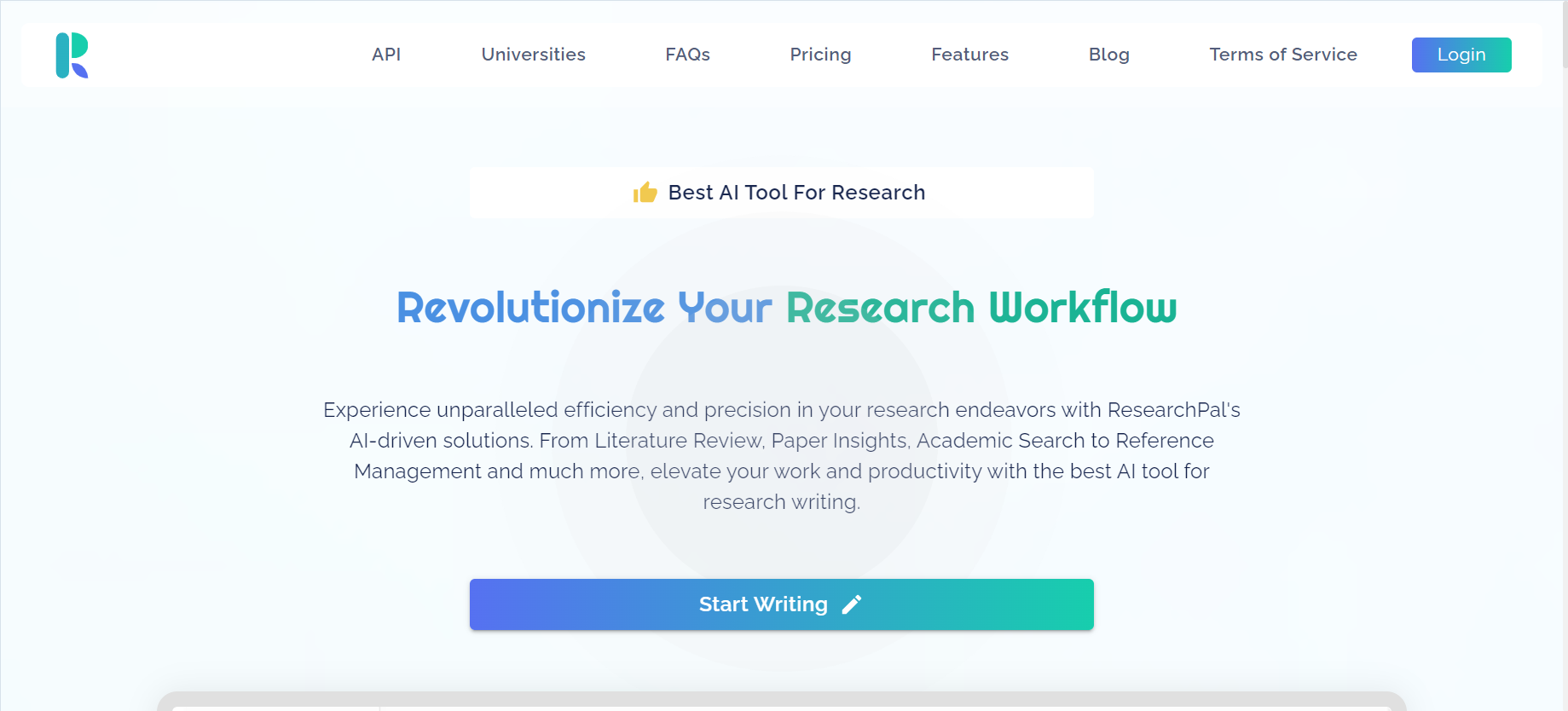
ResearchPal is an AI-powered research and academic writing platform. It helps you discover relevant papers, generate literature reviews, chat with PDFs to extract key insights, and produce writing with accurate citations — all in one workspace built for researchers and students.
2. Who Is ResearchPal Best For?
✅ Graduate students drowning in reading
If you’re facing a mountain of papers for a thesis or lit review, the discovery and summarization features save serious time.
✅ Researchers who hate citation formatting
Accurate, auto-generated citations are a small feature that removes a genuinely annoying, error-prone task.
✅ Anyone who works from dense PDFs
Chatting with a PDF to pull out methods, findings, or a specific quote is faster than re-skimming a 30-page paper.
❌ Students hoping to outsource actual thinking
This should assist your analysis, not replace it. Leaning on it to write your paper for you risks both learning and academic-integrity problems.
❌ Fields needing paywalled or niche databases
Coverage depends on accessible sources; if your work relies on specialized subscription databases, verify it can reach them.
3. Core Features Breakdown
3.1 Paper discovery & literature reviews
Find relevant research and generate structured literature reviews faster than manual searching — a strong starting point for any project.
3.2 Chat with PDFs
Upload papers and ask questions to extract key insights, methods, and quotes without re-reading everything.
3.3 Accurate citations
Generate citations as you write, reducing formatting errors and the tedium of building a reference list by hand.
3.4 AI writing & analysis workspace
Draft, analyze, and cite in one place instead of juggling a search engine, PDF reader, citation manager, and word processor.
4. Pricing
ResearchPal has a free plan (no credit card required) and affordable paid tiers. Based on the figures on the site at the time of writing:
- Free — $0, no credit card required, to test core features at a limited volume.
- Paid plans — tiers around $9 and $13 per month (monthly vs annual billing affects the effective rate).
- Higher/one-time amounts such as $39.99 and $50 also appear for longer terms or larger allotments.
Prices are in USD and can change — confirm the current plans and limits on ResearchPal’s pricing page before subscribing.
5. Pros & Cons
Pros: fast literature discovery and review drafting; genuinely useful chat-with-PDF; accurate citation generation; all-in-one workspace; free plan with no card required; affordable paid tiers.
Cons: AI summaries and citations must be verified against the source; coverage limited to accessible databases; over-reliance raises academic-integrity risks; not a substitute for your own critical analysis.
6. ResearchPal vs Elicit
Elicit is a well-known AI research assistant strong on structured extraction across many papers. ResearchPal bundles discovery, chat-with-PDF, citations, and writing into a single workspace aimed at end-to-end academic writing. If you want one place to go from search to drafted, cited text, ResearchPal is convenient; if you mainly need rigorous multi-paper data extraction, Elicit is worth comparing.
7. Final Verdict: Is ResearchPal Worth It in 2026?
As a research accelerator, yes — it cut the busywork of discovery, summarizing, and citation formatting significantly for me. The important caveat: treat its output as a draft assistant, always verify citations and summaries against the original papers, and keep the actual analysis and argument your own. Used that way, and with a free plan to test, it’s an easy recommendation for students and researchers.
Academic-integrity note: AI research tools should support your work, not replace it. Verify all AI-generated citations and summaries against the primary sources, and follow your institution’s policies on the use of AI assistance in academic writing.
Frequently Asked Questions
Can ResearchPal generate citations?
Yes — it generates citations as you write; still verify each against the original source.
Can I chat with my PDFs?
Yes, you can upload papers and ask questions to extract insights, methods, and quotes.
Is there a free plan?
Yes, a free plan is available with no credit card required.
Does it write literature reviews?
It helps you discover relevant papers and draft structured literature reviews faster — review and refine the output yourself.
Is it allowed for academic work?
Use depends on your institution’s AI policy; use it to assist, verify all output, and keep your own analysis central.
👉 Where to Get ResearchPal
You can start free (no card required) and explore the plans here: Try ResearchPal.
Affiliate disclosure: the link above is an affiliate link. If you sign up through it, I may earn a commission at no extra cost to you. This review reflects my own hands-on testing.