Using technology in academia can sometimes feel like navigating a labyrinth, where the paths are unclear and the exits are elusive. In a world flooded with information, finding the right academic sources can be daunting, especially when deadlines loom and expectations weigh heavy. That's where Sourcely comes in—a tool that promises to streamline the process of sourcing and citing academic papers. I was intrigued by its AI-powered approach, which caught my attention as I constantly seek efficient ways to enhance my research.
Imagine being able to input a few keywords or phrases from your paper, and just like that, you receive a curated list of relevant academic sources. The promise of Sourcely is not just convenience, but also accuracy, as it claims to find relevant papers, summarize them, and even provide citations—all in one go. I knew I had to put it to the test to see if it lived up to the hype.
I dove right into the world of Sourcely, eager to explore its features and capabilities. Here’s what I discovered.
First Impressions
On visiting the Sourcely homepage, I was immediately struck by its clean and modern interface. The layout was user-friendly, with clear instructions on how to get started. The design felt inviting, which is a bonus for anyone who might be apprehensive about using new technology. I appreciated that there were no overwhelming pop-ups or distractions, allowing me to focus on the main features.
Upon signing up, I was greeted with a straightforward dashboard that highlights the main functionalities of the tool. The promise of AI assistance in academic sourcing was both exciting and reassuring. I felt optimistic that this platform could be a game-changer in how I approached my academic writing.
Quality and What You Get
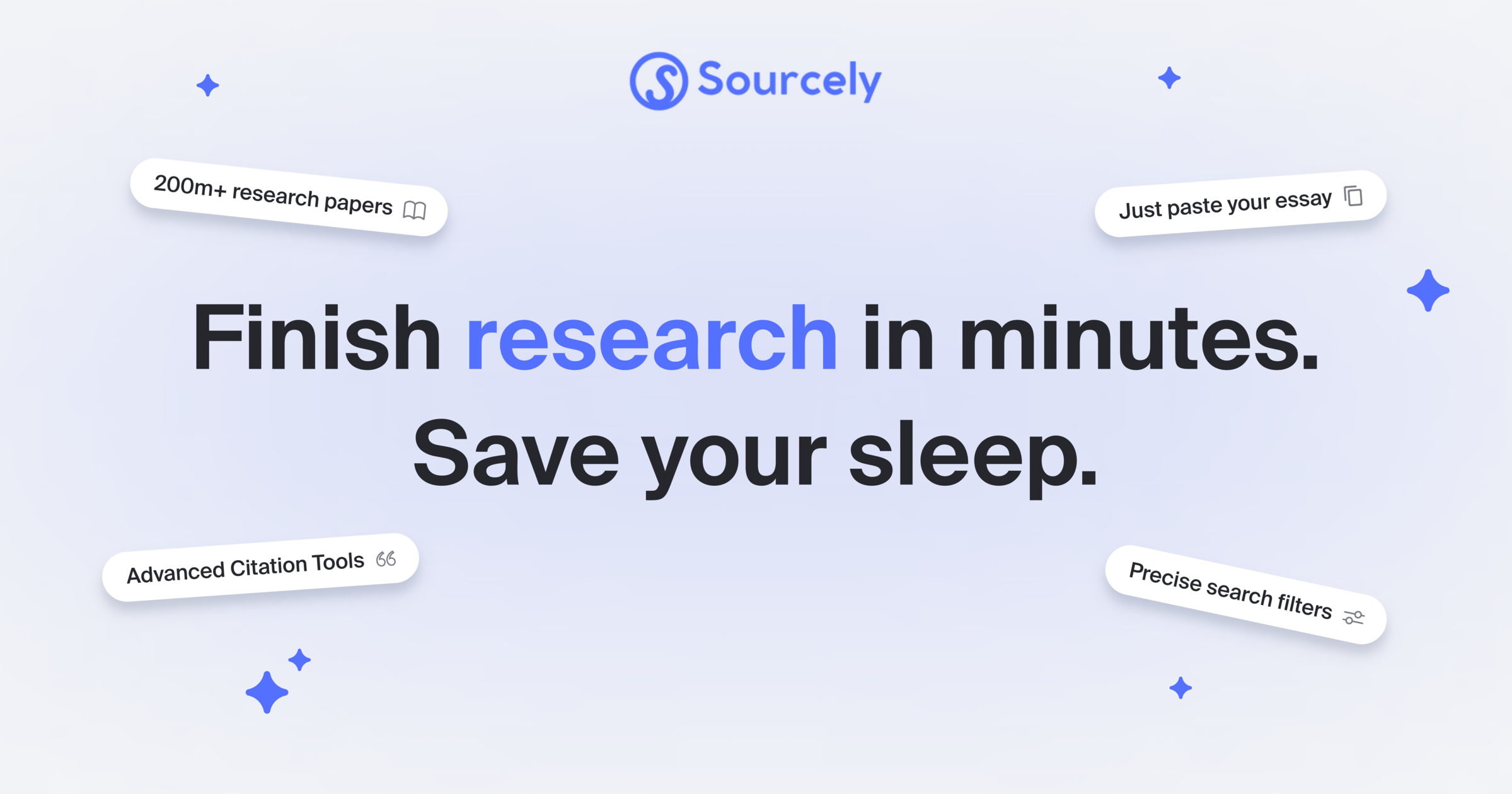
Sourcely is designed to be an AI-powered academic source finder that instantly retrieves relevant papers and citations based on the text you input. The core functionality revolves around its ability to interpret your queries and deliver useful results promptly.
The quality of sources generated is dependent on the input text, which means that the more specific your query, the better the results. I experimented with various phrases related to different subjects. In most cases, I found that Sourcely promptly provided citations that were not only relevant but also diverse, covering multiple perspectives on the topic.
In addition to sourcing, the summarization feature was particularly impressive. It succinctly boiled down the essence of each paper, making it easy to gauge its relevance without sifting through pages of text. This function holds immense value for those who are pressed for time and need quick insights.
Real-World Experience
As I continued to utilize Sourcely for different projects, I noticed that it significantly changed my workflow. Instead of spending hours in libraries or endlessly scrolling through digital databases, I could quickly generate a list of pertinent academic sources. This experience was particularly beneficial during my last-minute research phases.
One of the most valuable aspects was the ability to generate citations directly from the tool. Aligning styles like APA or MLA can often be a headache, but with Sourcely, I simply selected the desired citation style, and it provided perfectly formatted entries. This feature was a major time-saver, allowing me to focus more on crafting my arguments rather than getting bogged down in formatting issues.
However, while Sourcely excelled in many areas, I found that it sometimes struggled with niche topics or overly complex queries. In such cases, the output would be limited, and I had to cross-reference with traditional academic databases to fill in the gaps.
How It Compares to Alternatives
In the realm of academic sourcing tools, Sourcely is not alone. Other platforms like Google Scholar, Mendeley, and Zotero offer their own sets of features for researchers. However, what sets Sourcely apart is its dedicated focus on AI-driven source finding combined with citation generation.
While Google Scholar is excellent for broad searches, it lacks the specific tailoring that Sourcely provides. Mendeley and Zotero focus more on managing and organizing references rather than generating them based on input text. If you're looking for a tool that combines sourcing and citation in a streamlined process, Sourcely stands out as a more specialized solution.
I found that Sourcely complements these tools rather than outright replaces them. Using it alongside other platforms can cover various needs in the academic writing process, creating a more robust workflow.
Pros and Cons
- AI-Powered Sourcing: Quickly finds relevant sources based on input text.
- Summarization Feature: Provides concise summaries for easy assessment.
- Citation Generation: Automatically formats citations in various styles.
- User-Friendly Interface: Clean design that is easy to navigate.
- Time-Saving: Reduces the hours spent searching for academic papers.
- Reliable Output: Generally returns high-quality sources.
- Limited Niche Searches: May struggle with overly specific or complex topics.
- Dependent on Input Quality: Quality of output varies based on the clarity of input text.
- Not a Full Replacement: Best used alongside other research tools.
Price and How to Get the Best Deal
Currently, Sourcely does not explicitly list its pricing on its homepage, which can make it difficult to budget for usage without reaching out for more information. This often comes with a common challenge among many online tools. However, to get the best deal, I recommend visiting the homepage directly and signing up for any promotional offers they may have.
Check today's price and current deals at Sourcely
Additionally, staying updated with their newsletter or social media could provide insights into discounts or trial offers, especially for students who are often operating on tight budgets.
Tips
- Be Specific: When inputting text, use clear and specific phrases to yield the best results.
- Use Summaries Wisely: Utilize the summarization feature to quickly assess the relevance of sources before diving deeper.
- Pair with Other Tools: Combine Sourcely with citation managers like Zotero for a comprehensive workflow.
- Engage with Support: Don’t hesitate to reach out to customer support for queries or issues as they can provide helpful insights.
Who This Is Best For
Sourcely is ideal for students, educators, and researchers who frequently need to source academic papers and citations quickly. It’s particularly useful for those who may not have extensive experience with traditional databases or who are looking to streamline their research process. Additionally, anyone facing tight deadlines or working on complex subjects will find Sourcely to be a valuable ally in their academic pursuits.
FAQ
Q: Can I use Sourcely for any academic subject?
A: Yes, Sourcely is designed to find sources across a wide range of academic subjects, though specific results may vary based on the complexity of the topic.
Q: Does Sourcely provide citations in different formats?
A: Yes, you can generate citations in various styles, including APA and MLA.
Q: Is there a free trial available for Sourcely?
A: Information on a free trial is not specified; it’s best to check their website for the latest offers.
Q: How often are sources updated?
A: The frequency of updates is not detailed, but it’s advisable to use the most recent sources for current research.
Q: Can Sourcely help with writing essays or papers?
A: While Sourcely primarily focuses on sourcing and citations, the quality of sources can certainly aid in writing essays and papers effectively.
Final Verdict
Sourcely offers a refreshing approach to sourcing academic papers through its AI-powered capabilities. The speed and efficiency it provides can be a significant boost for anyone involved in academic writing, especially when the pressure is on. While it may not cover every niche topic perfectly, its strengths in summarization and citation generation make it a worthwhile tool in any researcher's arsenal.
If you're constantly searching for a way to simplify your academic sourcing process, I highly recommend giving Sourcely a try. It might just become your go-to resource when it comes to research and citations!
See the latest Sourcely coupons and offers here
To start enhancing your academic workflow, visit [Sourcely](https://www.sourcely.net/?via=find) today!