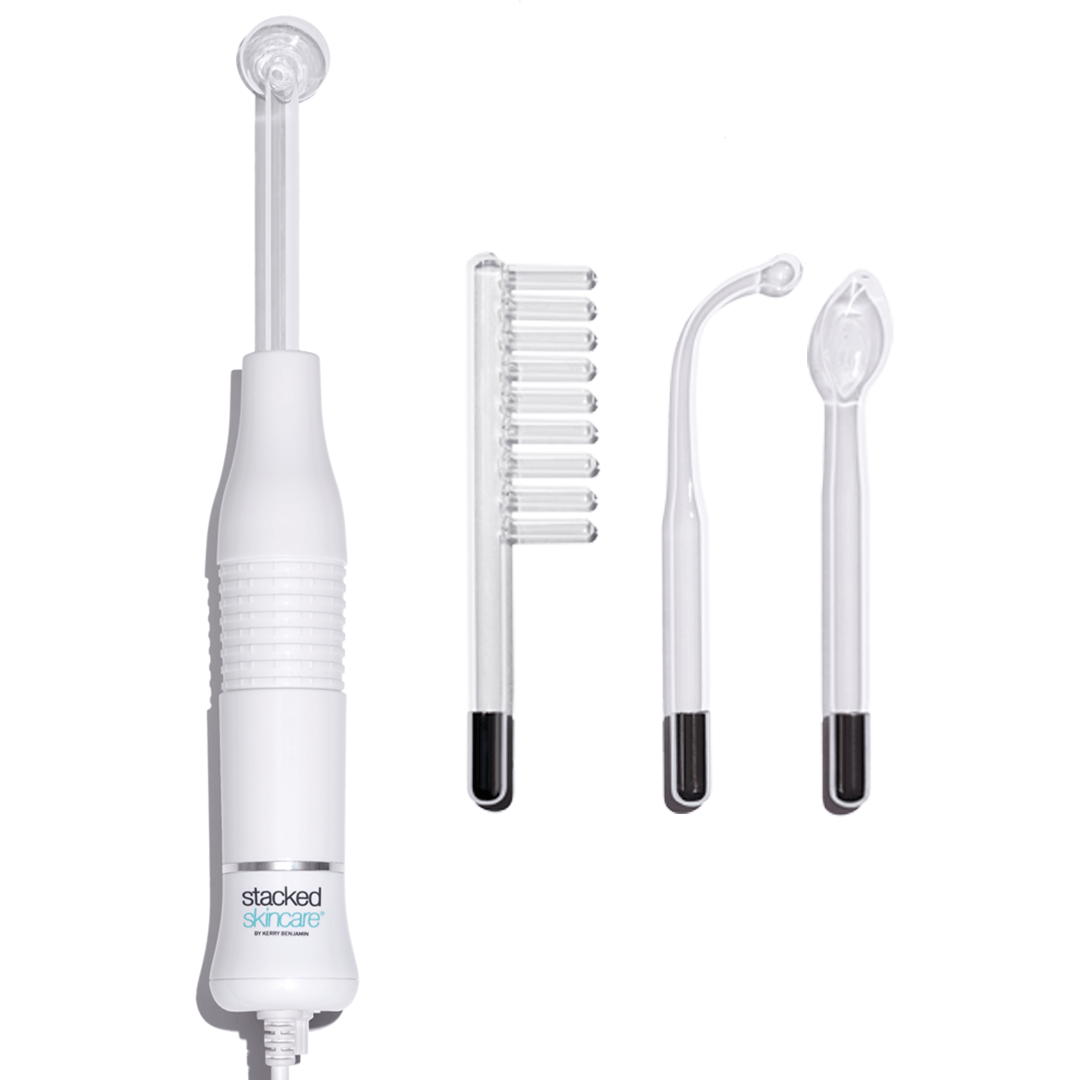
I have sat through plenty of professional facials where the esthetician pulls out a glowing glass wand at the end and glides it over my skin. That is high frequency therapy, and estheticians charge real money for it because it genuinely helps calm breakouts. So when I got my hands on the StackedSkincare High Frequency Wand, I was curious whether the at-home version could hold up.
First Impressions
The device itself is lightweight and comes with the classic neon-style glass electrode attachment. You turn a dial to control intensity, and within seconds the tip lights up with a soft violet glow and a faint buzzing hum - exactly like the in-office version.

How It Feels On Skin
There is a light tingling sensation as the electrode passes over your face, and it leaves a faint ozone-like smell in the room afterward (totally normal for high frequency devices). I used it on clean, dry skin for about 3-5 minutes per session, focusing on areas prone to congestion.
Pros and Cons
Pros: spa-level treatment without the spa price tag, easy to use, glass electrode is gentle, helps calm redness after a few consistent uses.
Cons: takes a few sessions before you notice a real difference, not a substitute for treating cystic acne medically, the glass tip requires careful handling since it can chip.

Final Verdict
If you are the type who books facials specifically for that high frequency finish, this device pays for itself quickly. It will not replace your dermatologist, but as a consistent at-home addition to a breakout-prone routine, it earns its spot on my counter.
Ready to try it yourself? Check out the StackedSkincare High Frequency Wand here.
#review #skincare #StackedSkincare #highfrequency #acnecare #beautytech